2026 Davis-Bacon Compliance: Documented Duties and Remedies
— WH347.io Team
Review documented Davis-Bacon obligations in 2026: correct classifications, fringe benefits, subcontractor payrolls, and weekly checks. Learn the actual remedies without assuming a universal fine or new enforcement trend.
For contractors on DBRA-covered projects, compliance requires paying the applicable prevailing wage and fringe benefits, keeping accurate records, and submitting weekly certified payrolls. This 2026 checklist describes documented obligations, not a newly established enforcement campaign.
An inaccurate report may reveal an underlying wage or recordkeeping problem. Remedies depend on the applicable law and facts; the sources cited here do not support a universal $10,000-per-violation fine. Review both the report and the wages actually paid.
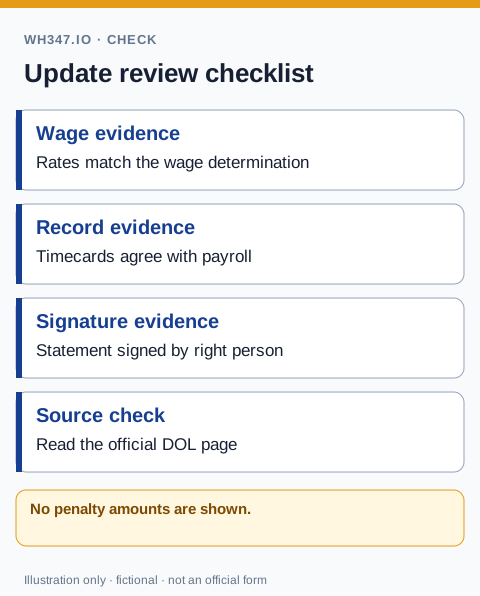
Documented Compliance Risks
DOL Fact Sheet 66 identifies misclassification, incomplete records, failure to pay the full prevailing wage including fringe, and missing weekly submissions as typical issues. It does not establish a 2026 automated cross-referencing program or rank violations for this year. Review these risks regardless of which software you use:
- Misclassification — use the rate for work actually performed and keep time by classification; an underpayment can create back-wage liability.
- Fringe benefit errors — reconcile cash-in-lieu and allowable plan credits with the applicable wage determination and supporting records.
- Inaccurate certification — review the report before signing; falsified certifications can expose a contractor to civil or criminal prosecution.
How to Protect Your Business
DOL Fact Sheet 66 describes withholding for unpaid wages, possible contract termination, and three-year debarment. It also identifies CWHSSA overtime liquidated damages, which are distinct from a universal Davis-Bacon fine. Use our audit preparation guide and prime/subcontractor responsibility guide to review the documented obligations.
1. Audit Your Flow-Down Liability
Prime responsibility is a documented contract obligation, not a new trend established by this article. Under 29 CFR 5.5(a)(6), required clauses must flow down to subcontracts, and the prime is responsible for subcontractor compliance. Section 5.5(a)(3)(ii)(A) makes the prime responsible for submission of subcontractor payrolls. Verify submissions and wage compliance; federal rules do not universally require every sub to use digital reporting.
2. Reduce Transcription and Review Imported Data
Imports can reduce repeated typing but can also carry source-data or mapping errors into a report. Whether you use a QuickBooks certified-payroll report, a paystub import, or manual entry, compare the results with actual project hours, classifications, wages paid, deductions, and fringe evidence before signing.
3. Run Weekly Internal Logic Checks
Each week, compare your payroll register against your certified reports and verify that daily hours add up correctly. For CWHSSA-covered overtime, calculate the premium on the basic rate; amounts satisfying the required fringe obligation are excluded from that overtime calculation. Check any other applicable overtime law as well.
Compliance as a Competitive Advantage
DOL's government-contract overtime guide explains CWHSSA coverage, the basic-rate calculation and the treatment of fringe benefits. Review that calculation alongside the contract rather than multiplying the entire wage-and-fringe package.
Consistent records and weekly review can help you identify errors earlier and respond to agency questions. Automation is a workflow aid, not a guarantee of compliance or protection against liability. Correct underlying wage problems as well as the reports that describe them.
Frequently Asked Questions
What are the 2026 Davis-Bacon Act enforcement changes?
This guide does not establish a new 2026 automated enforcement program. It reviews documented DBRA duties from DOL Fact Sheet 66 and 29 CFR 5.5: prevailing wages and fringe benefits, accurate records, weekly payrolls, and subcontractor compliance.
What is the fine for Davis-Bacon violations in 2026?
There is no universal $10,000-per-violation fine established by the sources for this guide. Remedies can include unpaid wages, withholding, contract termination, and three-year debarment. CWHSSA overtime violations can involve separate liquidated damages; falsified certifications may result in civil or criminal prosecution.
Can a prime contractor be fined for a subcontractor's Davis-Bacon violation?
The prime is responsible for subcontractor compliance and submission of required subcontractor payrolls under 29 CFR 5.5. Withholding can cover unpaid wages owed by a subcontractor. This is not proof of a new 2026 fine schedule or a universal digital-system requirement.
What is the most common Davis-Bacon compliance mistake in 2026?
The cited official guidance does not rank 2026 violations. DOL lists typical issues including misclassification, incomplete hours and classification records, failure to pay full wages and fringe, missing apprentice documentation, and failure to submit weekly payrolls.
How does debarment work under the Davis-Bacon Act?
DOL Fact Sheet 66 identifies debarment from future contracts for three years as a possible sanction for Davis-Bacon labor-standard violations. It is not an automatic consequence of every error. Contractors can challenge WHD determinations through the administrative hearing and appeal process described in the fact sheet.