How to Correct a WH-347 After It's Been Submitted
— WH347.io Team
Mistakes on a submitted WH-347 don't have to become compliance problems — if you handle them correctly. Here's how to make corrections on paper forms and software, when to notify the contracting agency, and the errors most likely to require a formal correction.
A submitted WH-347 with an error on it is not a crisis — it's a problem with a defined solution. The Department of Labor and contracting agencies routinely process corrected certified payrolls, and an honest mistake corrected promptly is treated very differently from an uncorrected error discovered during an audit. The key is knowing how to make corrections properly and when to proactively notify the agency rather than waiting for them to ask.
The Two Correction Methods
How you correct a submitted WH-347 depends on how it was originally submitted.
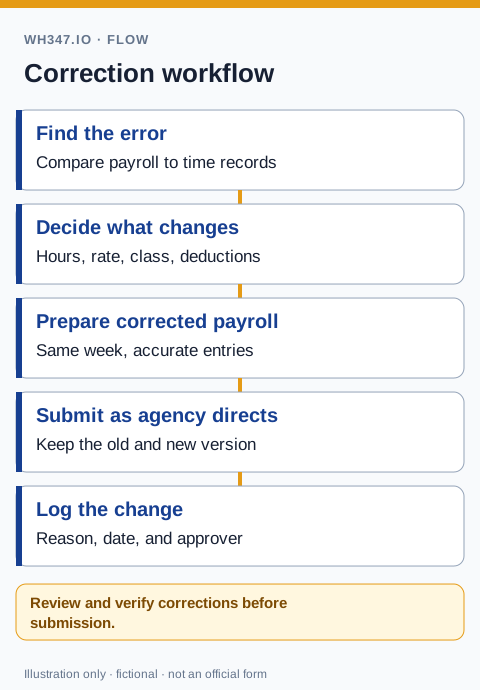
For paper forms: the accepted method for correcting a handwritten or printed WH-347 is to draw a single line through the incorrect entry, write the correct value above or beside it, and have the authorized signatory initial the correction. Do not use whiteout or correction fluid — covered-up entries raise authenticity questions. If the errors are extensive enough that the corrected form is difficult to read, prepare a clean corrected version, mark it clearly as a correction (e.g., 'CORRECTED' stamped or written prominently at the top), and attach both versions when resubmitting.
For software-generated forms: most certified payroll software, including WH347.io, allows you to reopen a submitted payroll week, make corrections to the underlying timecard data, and generate a new WH-347 PDF. The corrected PDF should be submitted to the agency in the same manner as the original, clearly marked as a correction for that payroll week and payroll number. Include a brief cover note explaining what was changed.
When to Notify the Contracting Agency
The DOL WH-347 instructions define the required accurate data and signed certification, but do not prescribe a universal line-through correction method. Confirm the agency's process before altering a submitted record. Use our common-error checklist to review the revised values and our retention guidance to preserve both versions.
For minor administrative errors — a transposed digit in a deduction amount, a missing initial on the Statement of Compliance, a formatting issue — you can often submit the corrected form without a formal notification, depending on the agency's process. A cover note with the correction explains the change and closes the loop.
For substantive errors, proactive notification is both the right approach and the practical one:
- Worker underpayment — if the error resulted in a worker receiving less than the applicable prevailing wage, notify the agency and provide corrected payroll showing the correct wages. You will also need to pay the worker the back wages owed.
- Misclassification — if a worker was reported under the wrong prevailing wage classification (and potentially paid at the wrong rate as a result), notify the agency with a corrected form and documentation explaining the correct classification.
- Missing workers — if a worker who performed work on the project was inadvertently omitted from the WH-347, the correction adds those hours and wages and should be communicated to the agency proactively.
- Incorrect fringe reporting — if fringe benefits were reported incorrectly in a way that affects whether the prevailing wage was met, treat this as a substantive error requiring agency notification.
Common Errors That Require Correction
Not all errors are equally serious, but the following are among the most common findings that lead to formal correction requests from contracting agencies or DOL investigators:
- Wrong work classification — the most frequent substantive error. A worker classified as Laborer who was actually performing Carpenter work must be reclassified at the higher rate, which typically means back wages are owed.
- Incorrect hourly rate — using last year's wage determination rate, applying the wrong classification's rate, or a simple data entry error. Any rate below the required prevailing wage triggers a back-wage obligation.
- Missing overtime — if a worker exceeded 40 hours on the project and overtime wasn't reflected on the WH-347, the form needs correction and the additional overtime pay needs to be made.
- Deduction errors — transposed amounts, deductions that don't match actual withholding, or deductions that weren't actually taken. Deduction errors that don't affect the net wage obligation are lower priority, but they should still be corrected.
- Incorrect fringe treatment — reporting fringe as a plan contribution when it was paid as cash (or vice versa), or failing to include cash-in-lieu fringe in the gross wages column.
- Missing weeks — if a payroll week was submitted with the wrong week-ending date and an actual week is missing from the record, both the misfiled form and the missing week need to be corrected.
Timing: How Quickly Should You Correct?
When you identify an error — whether you found it yourself or the agency flagged it — correct it promptly. 'Promptly' in practice means within a week or two for most errors, not weeks later. A backlog of uncorrected certified payrolls signals to an auditor that the compliance program isn't being managed. Correcting quickly, especially when you found the error yourself, demonstrates the kind of good-faith compliance effort that auditors take into account.
If the error involves underpayment, the back wages should be paid to the affected worker as soon as the correction is complete — not at the next regular payroll cycle if that's weeks away. Document the back wage payment and include that documentation with the corrected certified payroll.
Correcting a False Statement of Compliance
The Statement of Compliance on page 2 of the WH-347 is a legal certification. If an error on the form means the original certification was inaccurate — for example, you certified that all workers were paid the prevailing wage when in fact one worker was misclassified and underpaid — the corrected form with a new Statement of Compliance is how you make the record accurate. Provide an honest brief explanation of what happened and what you've done to correct it.
The distinction auditors focus on is between innocent error and intentional falsification. A contractor who finds their own error, corrects it, pays back wages, and submits a corrected certified payroll is in a fundamentally different position than one who knowingly submits false information. Prompt, honest correction is the right response every time.
Frequently Asked Questions
How do you correct a WH-347 that has already been submitted?
For paper forms, draw a single line through the incorrect entry, write the correct value, and have the authorized signatory initial the correction. Do not use whiteout. For software-generated forms, correct the underlying timecard data and generate a new WH-347 PDF marked as a correction. Submit the corrected form to the contracting agency with a brief note explaining what changed.
When do you need to notify the contracting agency about a WH-347 correction?
Notify the agency proactively when the error is substantive — worker underpayment, misclassification at a lower rate, missing workers, or incorrect fringe reporting that affects prevailing wage compliance. For minor administrative errors (formatting, transposed deduction amounts), a corrected form with a cover note is typically sufficient without a separate notification.
What errors most commonly require a WH-347 correction?
The most common substantive errors requiring correction are: wrong work classification (and associated underpayment), incorrect hourly rate, missing overtime, incorrect fringe benefit treatment, and omitted workers. Deduction errors that do not affect the net wage calculation are lower priority but should still be corrected.
What happens if a WH-347 error resulted in a worker being underpaid?
If an error caused a worker to receive less than the applicable prevailing wage, you must pay them the back wages owed promptly — not at the next payroll cycle. Document the back wage payment and submit it along with the corrected WH-347 to the contracting agency. Notify the agency proactively rather than waiting for them to discover the underpayment.
Is it a problem to correct a signed Statement of Compliance?
No — correcting a Statement of Compliance that was inaccurate due to an error is the right thing to do. A new Statement of Compliance accompanies the corrected WH-347. Auditors distinguish between honest errors corrected promptly and intentional falsification. A contractor who self-identifies an error, corrects it, and pays back wages is in a very different position from one who knowingly files false reports.